Branco Weiss Fellow Since
2026
Research Category
Archaeological science, biomolecular archaeology, archaeometabolomics, sensory archaeology, cultural heritage
Research Location
University of Tübingen, Tübingen, Germany
Background
The past is typically reconstructed through what survives visually: monuments, texts, artefacts, and images. Yet ancient societies were immersed in rich sensory environments shaped by perfumes, incense, medicinal plants, foods, and ritual substances. Because scents are ephemeral and their botanical sources often leave few visible traces, the olfactory dimension of human history has remained largely inaccessible to archaeological investigation. Recent advances in biomolecular science now make it possible to identify minute molecular residues preserved in archaeological materials, opening entirely new opportunities to investigate how smell influenced memory, identity, ritual practice, health, trade, and everyday life in the past.
Details of Research
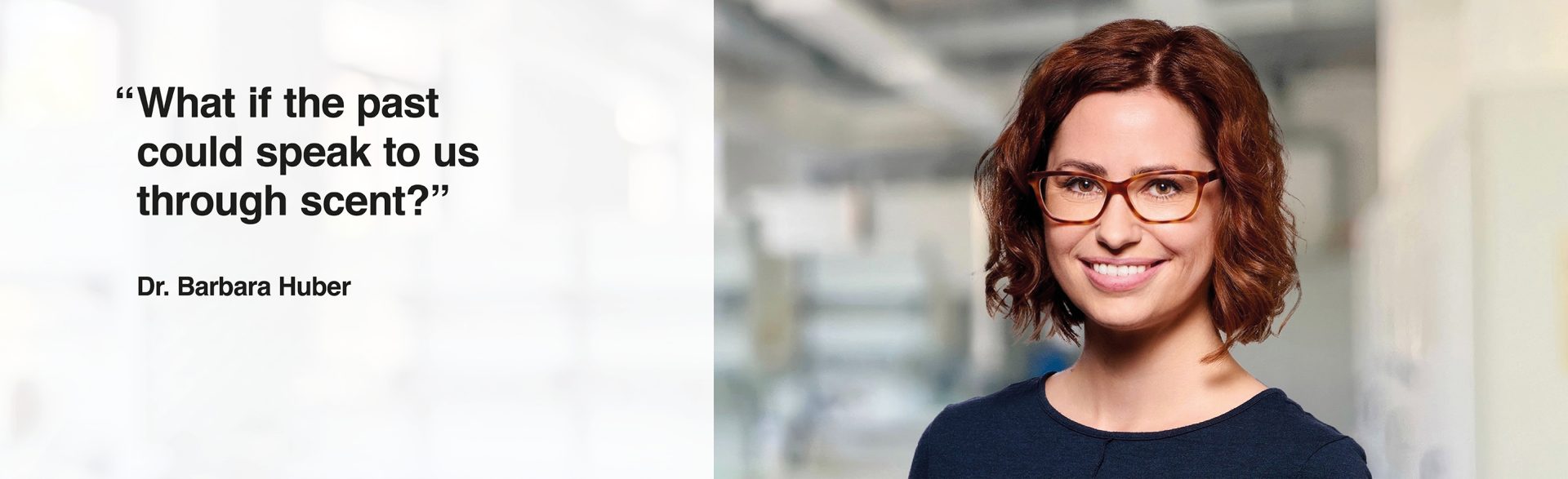
Barbara Huber’s project, MetAPlant (Metabolomics of Ancient Aromatic Plants), seeks to establish archaeometabolomics as a new field of archaeological science. The project develops analytical workflows capable of detecting both volatile and non-volatile compounds associated with aromatic plants and scent-producing substances. By integrating evidence from artefacts, dental calculus, and sediments, Huber will reconstruct how aromatic materials were prepared, consumed, inhaled, traded, and spatially organized within ancient settlements. She will also create the first comprehensive reference library of aromatic plant metabolomes, enabling the identification of ancient perfumes, incense mixtures, medicines, and cosmetics. Beyond its scientific significance, the project aims to translate these discoveries into historically grounded scent recreations for museums, creating new forms of public engagement and preserving intangible cultural heritage through multisensory experiences.