Branco Weiss Fellow Since
2026
Research Category
Stem cell biology, epigenetics, hematopoiesis, aging, cancer biology, women’s health
Research Location
Institute for Research in Biomedecine (IRB), Barcelona
Background
Aging is often viewed as the passage of time, measured through chronological age, accumulated cellular damage, inflammation, and mutational burden. Yet individuals of the same age can follow very different biological trajectories. One possible reason is that the body does not age only through time, but also through the major physiological events it experiences across life.
Pregnancy and menopause are two striking examples of such events. Pregnancy is a transient systemic state that profoundly remodels hormones, metabolism, immunity, and blood production. Menopause, by contrast, is a long-term endocrine transition associated with immune remodeling and chronic low-grade inflammation. Both are natural life events, yet they are often overlooked in aging research or treated as sources of variability rather than as biological variables in their own right.
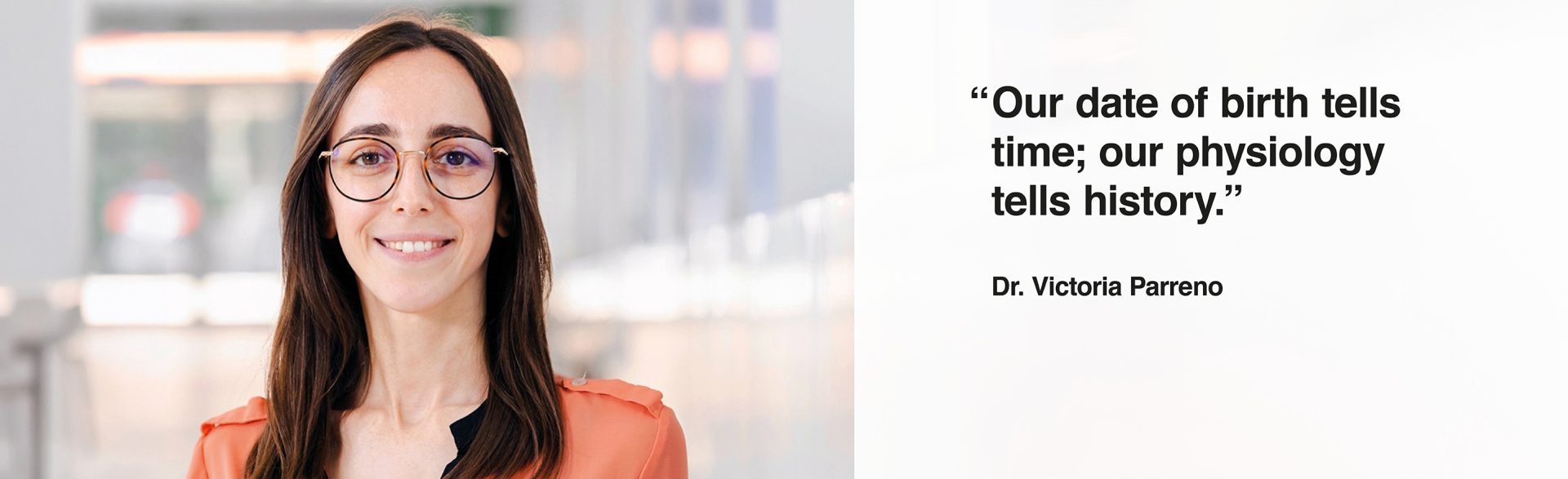
Dr. Victoria Parreno’s research asks whether these physiological histories can leave lasting memories in blood stem cells, the long-lived cells that sustain blood and immune production throughout life. Her work aims to uncover whether aging is not only the passage of time, but also the biological memory of major life events.
Details of Research
Victoria Parreno’s project explores how female-specific physiological transitions – including pregnancy and menopause – shape the long-term behavior of hematopoietic stem cells. She proposes that stem-cell clones act as biological recorders of life history, storing information about physiological stress and adaptation through durable epigenetic states. Using advanced lineage-tracing technologies, genetic models, and single-cell analyses, she will track how these experiences influence stem-cell function, blood production, aging, and susceptibility to leukemia. By integrating stem-cell biology with physiology and women’s health, the project seeks to establish a new field linking life history to cellular memory, providing a deeper understanding of how past experiences influence future health trajectories.